EN
EN
SHOE SIZE
The key to a perfect fit
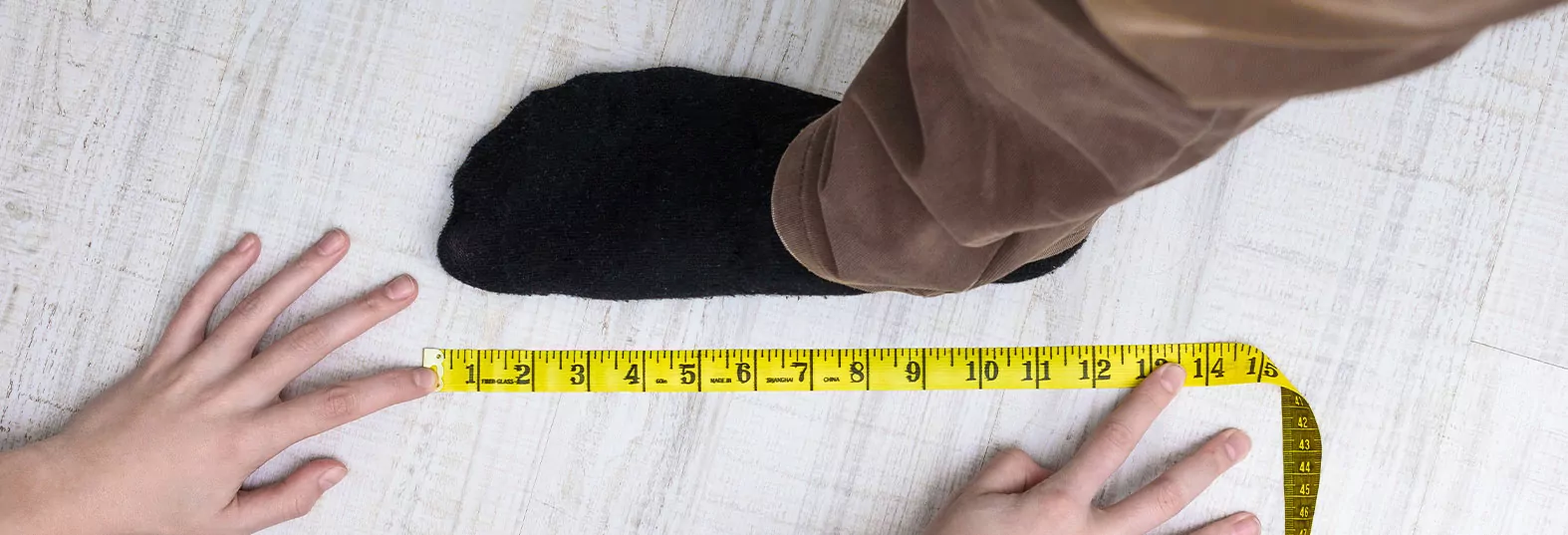
Statistically speaking, the average shoe size of a German man is 42 exactly, which was also the case 40 years ago. Although people are clearly getting taller, it cannot be assumed that their feet are getting longer. When talking about “shoe size”, most people understand the length of the shoe/foot, even though the term also refers to the width.
The term “shoe size” is usually limited to a numerical value. The problem, however, is that there is no universally accepted system for measuring shoe size. What’s more, there are different units of measurement. When buying shoes, it is absolutely essential to find the right fit. Shoe size and width represent key factors in this regard, as the correct fit promotes healthy feet, as well as their functionality and performance.
How are shoe sizes measured?
The current confusion in terms of shoe sizes goes back a long way. King Edward II of England introduced the world’s first-ever shoe size measurement system back in 1324. Half-sizes made their debut in the United States in 1880, with quarter-sizes coming onto the scene 20 years later, although they were soon scrapped due to extortionately high storage costs. Other size systems were introduced across the globe. While this was no problem 80 years ago, the result is now chaos, especially in today’s world, where people cross continents as a matter of course and in which shop shelves have been consigned to history by the Internet. An attempt by the International Organization for Standardization, based in Geneva, to launch a universal shoe size system (Mondopoint) failed back in the 1980s.
What shoe sizes can be found in Europe?
Standard European shoe sizes are based on a metric scale. With measurements starting at zero, the smallest shoe size is 15 and generally extends to size 50 (excluding special sizes).
In this system, the distance between the individual sizes is exactly 6.67 millimetres (sometimes known as the “Paris point”). As this increment is occasionally too large for a precise fit, we also offer our shoes in half- sizes common in the UK.
Alongside the Paris point, other common shoe size systems are the British and American systems.
Are all shoe sizes the same?
Unfortunately not. Determining the correct shoe size is not only made more difficult by the proliferation of different systems, but also the way in which shoe sizes are calculated by different footwear manufacturers. To enable you to always find a perfect-fitting shoe at Sioux, we recommend that you take a look at our shoe size conversion chart.
Find out here how to measure your own shoe size.
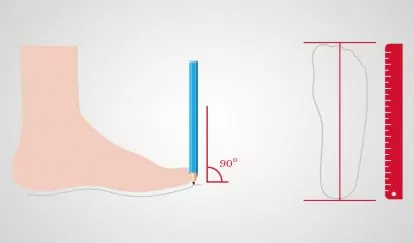
How do I work out my shoe size
Basically, working out your shoe size is perfectly simple. To measure it, you need a sheet of paper, the correct mathematical formula, a tape measure/ruler, a pocket calculator and, of course, your feet.
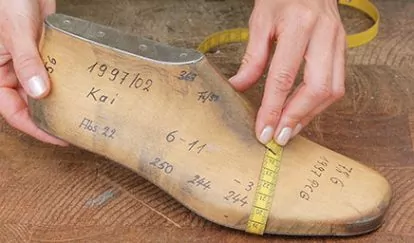
Shoe width
To make sure you get a perfect-fitting shoe, the right shoe size is not enough on its own. The shoe width, which defines the circumference of the forefoot, is no less important.
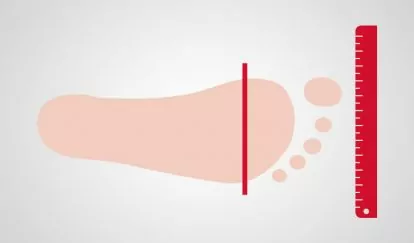
How do I work out my shoe width
It is not only the correct shoe size (i.e. length), but also the correct shoe width that determines the comfort of a shoe. Find out how to measure your own shoe width here.
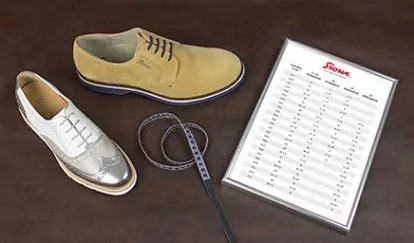
Shoe size conversion
One of the major uncertainties when it comes to buying shoes is the question of which shoe size is the right one to opt for. There are different shoe size systems across the world. Here are the three most relevant systems: US, UK and EU sizes (Paris point). With our shoe size table, you are guaranteed to find the perfect shoes for you.

Comfort
Moving with light-footed ease came naturally to the North American Indians for millennia – and means one thing above all else for Sioux: ultimate comfort. This is the essential difference between German footwear manufacturer Sioux and other shoes. The famous moccasin feeling can only be truly felt on the feet when the craftsmanship is accomplished by hand. Sioux prides itself on offering a perfect fit and premium comfort.
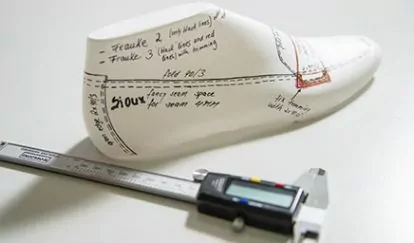
Shoe size and fit
As the foot performs a rolling motion when walking, it bears your weight in various areas and thus changes shape in doing so. The hallmark of a perfect-fitting shoe is that the toes and the foot itself have enough space within the shoe throughout this rolling motion and that the heel experiences sufficient grip. When a shoe fits, the heel does not slip out of the back of the shoe, and the shoe sits so perfectly in the midfoot area that the foot is supported – and is unable to slip forwards – hence the shoe pinching.