DE
DE EN
EN FR
FR NL
NL
THE SHOE LAST
Giving shoes their shape
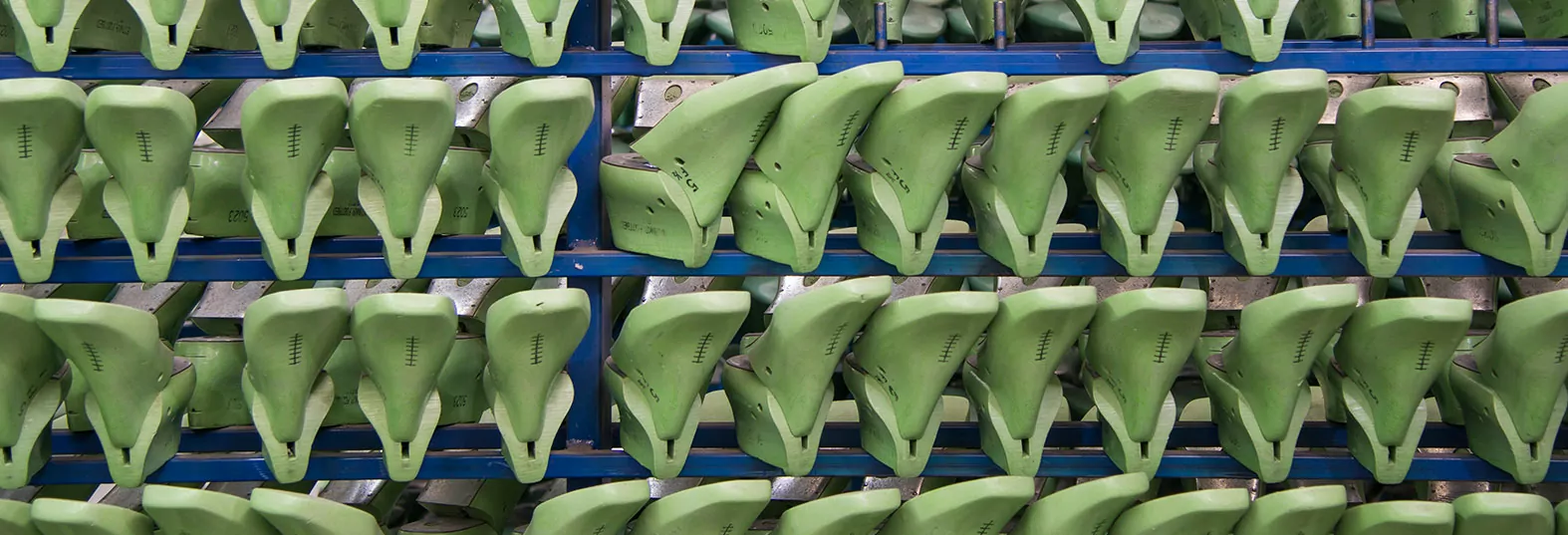
Lasts are moulds that are modelled on the foot, and every shoe is constructed around these lasts.
Lasts are always made in pairs, one for the left foot and one for the right foot. This is, in fact, quite a recent development. Until the end of the 19th century, the manufacturing of shoes was based on a singular last to keep the costs low, which is why there was no difference between the left and right shoe. Shoes first had to be broken in to create a suitable fit – which was an unsurprisingly painful process.
Nowadays, it goes without saying that a perfect fit is guaranteed with Sioux. The last is the key to achieving this. Each model has a different last, with the initial lasts being made of wood (for the prototype), and then later produced from plastic for batch production.
Creating lasts is a science in itself. The lasts are a product of the great know-how and experience that Sioux has collected over many decades. Our most successful lasts have stood the test of time through various trends. A last has over 100 points of measurement, and each and every one is important in determining how the finished shoe will look, with individual measurements for the balls of the feet, heels and instep. The last is responsible for the perfect fit of a finished shoe. Today, developing lasts is aided by CAD systems. Achieving the right last for each shoe, however, is still a meticulously detailed process, even in the 21st century, which is why it is our most experienced employees who work in the development department.
Women’s size 4.5 and men’s size 8 men are used when making prototypes and patterns.
Later in the series, each shoe size has its own last. Therefore there is an almost unmanageable amount of shoe lasts, we affectionately call this „our lasts park“. This last workshop is not merely a very high-cost part of the business – the lasts and know-how that comes with them represent one of the most important intangible assets of a shoe manufacturer.
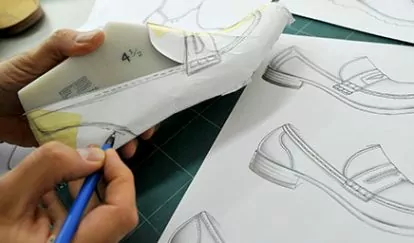
Developing models
Even before the material or the colour of a shoe is chosen, the initial concepts for the design and the lasts must be developed. The model development department is responsible for all of these steps.
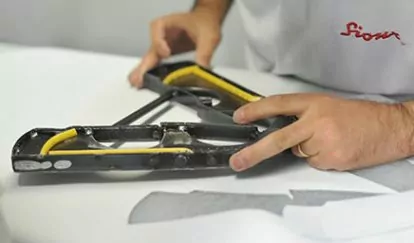
Stamping department
The stamping department cuts or stamps the leather to create individual components needed for the shoe upper (shaft). These parts are either cut out by hand or using a laser cutter (this usually takes place during the preparatory stages and prototype manufacture) or are stamped using a punching knife (in batch production).
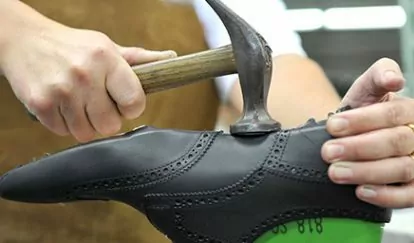
Assembly department
The assembly department is the heart of shoe production, where the shoe upper (upper part of the shoe) and sole become the finished shoe. Also in the assembly of shoes most of the work steps are carried out in skilled manual work.
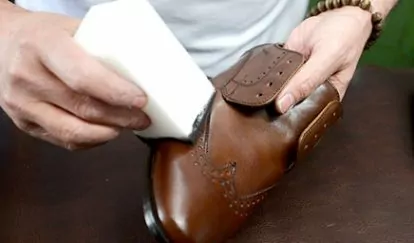
Finish
As the name implies, the finishing department is the final stage of the entire footwear manufacturing process. It is the final stage before creating the end product – it all comes down to the finishing. This is the stage where the final look of the shoe is created, and where it gets its final touches. The high-quality fats and creams are applied here, giving the leather depth, protection and radiance.
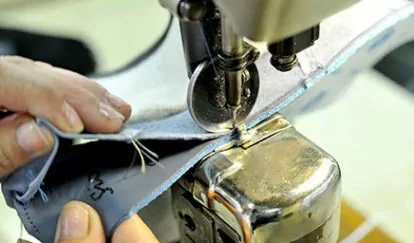
The sewing department
The sewing department receives the (cut-out) individual components of the the upper shoe from the stamping department. This is done manually using a sewing machine.
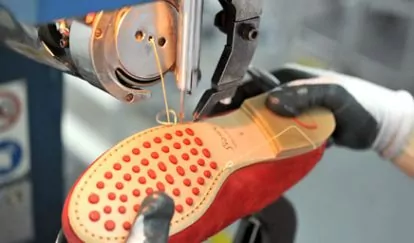
Shoemaking
There are lots of steps involved in making a shoe. From developing the model in the first instance, to the stamping, sewing and putting the finishing touches to the shoe at the very end.