DE
DE EN
EN
HOW TO CLEAN WHITE OUTSOLES
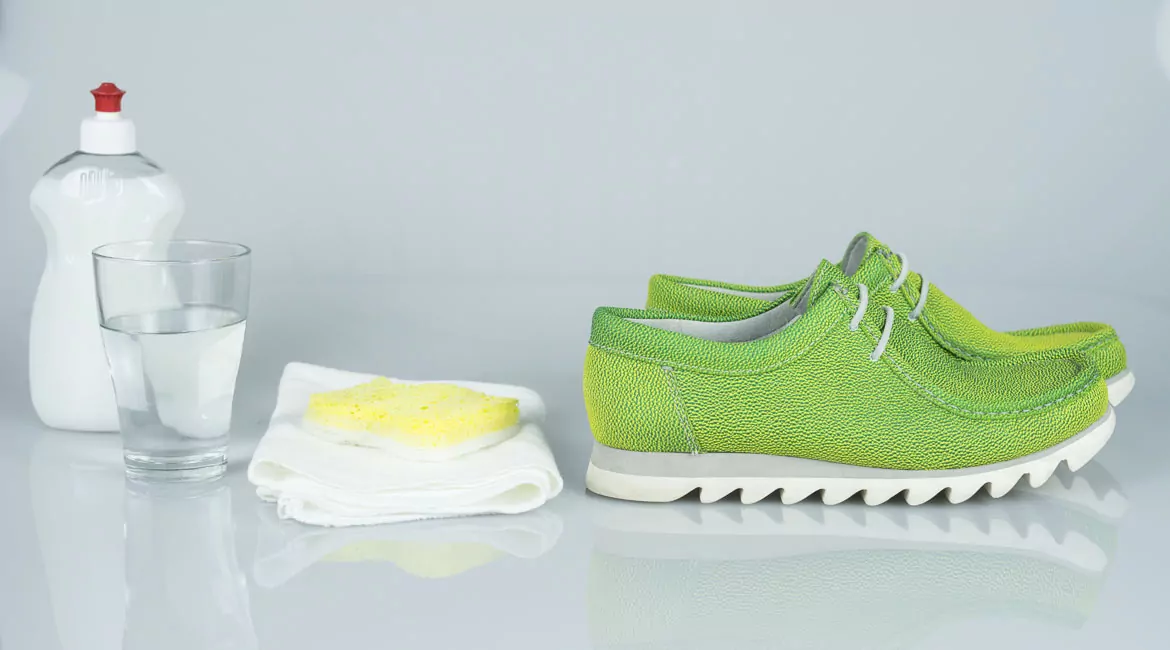
They are the highlight of the season: white outsoles. Be it for sneakers, our Sioux-Grashoppers or moccasins. White soles are a must-have. The disadvantage is that they get dirty easily. Hence, the frequently asked question: How do I get white soles clean again?
We have looked into the question of how to best clean white soles. In the following, we will reveal the best tricks to make white soles shine again.
The most important hint beforehand: Neither Sioux shoes nor Sioux-Grashoppers in canvas materials can be washed in the washing machine. As for all our shoes, we use high-quality leather, at least in the shoe (lining leather) or in the sole (outsole leather). Leather should never be completely soaked. Therefore, Sioux shoes or Sioux Grashoppers cannot be washed in the washing machine, as this would irreparably damage the leather texture. However, there are other good methods for cleaning white soles, which we would like to introduce in the following.
First, we would like to point out that it is always important to work carefully when cleaning shoes and to avoid soaking the upper material (the shaft). The treatment of white outsoles should also be limited only to these.
For the prevention of tough stains: Use impregnation spray
You should impregnate your shoes thoroughly before wearing them for the first time. Although this does not provide one hundred percent protection against soiling, it is still a good basis for protecting your shoes against dirt and moisture. The impregnation spray can also be applied laterally to the white sole. It has a dirt-repellent effect and thus makes cleaning easier later on. The following tips for cleaning can be seen in our video.
Practical tip #1: Clean white soles with dish washing detergent (for light soiling).
For minor soiling on the soles, a damp kitchen sponge with a little dish washing detergent is usually sufficient for cleaning. As a precaution, you should use a dish washing detergent that is white or colorless clear. Now remove the dirt with some pressure in circular movements. Avoid contact with the upper material. Then rub the foam with a cloth and let your shoe dry. Done. For those who need even more cleaning power for their white soles, we have two more practical tips below.
Practical tip #2: Clean white soles with baking powder (for heavier soiling).
For a more energetic approach, use the following method: To clean your shoes, you need baking soda, clear laundry detergent, a glass, a toothbrush and a cloth. Put detergent and baking powder in a glass filled with water in a 1:1 ratio. Fill the glass only half full. Mix the whole thing with a damp toothbrush. You will see: The baking powder works like a propellant. Apply the bubbling mass to the soiled areas with a toothbrush in a circular motion. Let the foam work on your white outsole for a few minutes. If necessary, you can brush out the dirt with a toothbrush. Then wipe the sole with a damp, white soft cloth. Voilà. Afterwards it is important to let the shoes dry out without haste.
Practical tip #3: Clean white soles with toothpaste (for heavier soiling).
Baking powder is not used in every household. However, toothpaste (or tooth cream) should always be available. So here is the tip for those who don’t have any baking powder at home: Clean your white soles with a toothbrush and white toothpaste. Soak them briefly in water and brush over the surfaces in a circular motion until a foam is generated. It is a bit like brushing your own teeth. Dab off the excess foam and let the shoes dry well. This is where the cleaning agents (reactants), the small abrasive particles (cleaning particles) together with the whiteners in the toothpaste work wonders. However, with this method it is particularly important that the upper material (the shaft) does not come into contact with the toothpaste. Many toothpastes have a bleaching effect, which can lead to irreversible fading effect on textiles or leather. So proceed carefully. Rework a second time rather than apply too much toothpaste the first time.